
Table of Contents
- Introduction to RAPIDS
- Key Components of RAPIDS
- Performance Benchmarks
- Use Cases and Applications
- Integrating RAPIDS in Your Data Workflow
- Comparing RAPIDS with Traditional Data Science Tools
- Future Developments and Updates
- Conclusion
- Further Reading and Resources
Introduction to RAPIDS
What is RAPIDS?
RAPIDS, developed by NVIDIA, represents a significant leap in the field of data science. It’s a suite of open-source software libraries and APIs designed to enable GPU-acceleration for data science and analytics pipelines. Essentially, RAPIDS leverages the power of NVIDIA’s CUDA technology to speed up machine learning (ML) and data processing tasks.
Why is it Important?
The importance of RAPIDS lies in its ability to handle large datasets much faster than CPU-based solutions. In the era of big data, the speed at which data can be processed and analyzed is crucial. RAPIDS democratizes access to high-performance, scalable data science capabilities, making it a game-changer for researchers, data scientists, and businesses.
Key Components of RAPIDS
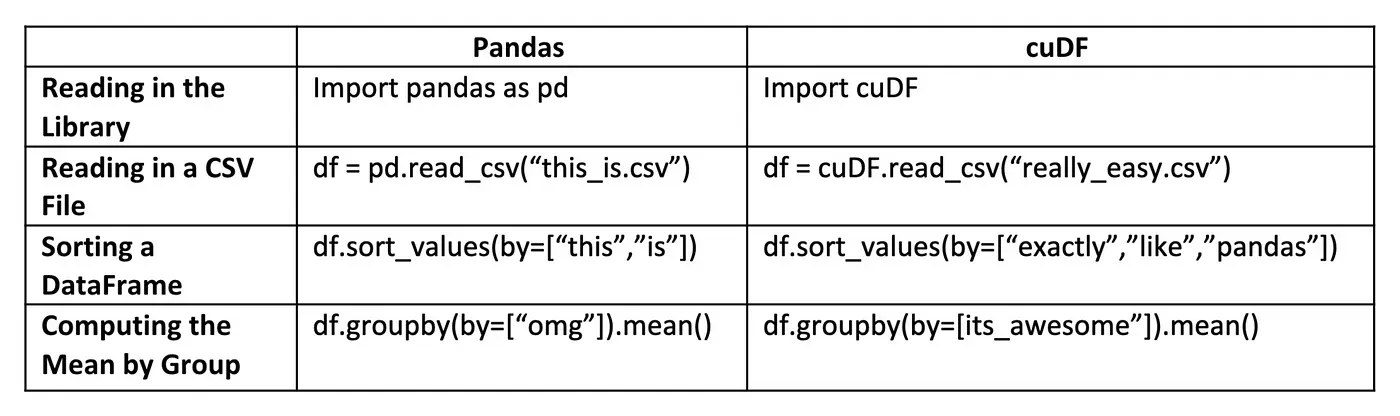
cuDF
- Description: cuDF is a GPU DataFrame library for loading, joining, aggregating, filtering, and otherwise manipulating data, similar to pandas.
- Impact: By performing these operations on the GPU, cuDF can achieve speedups of up to 10-100x over traditional CPU-based data processing libraries.
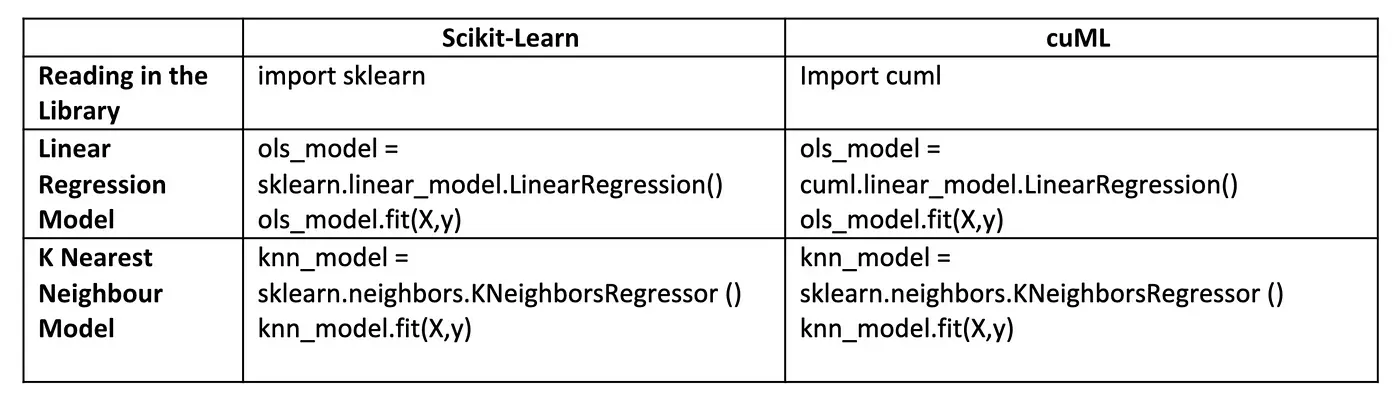
cuML
- Description: cuML is a suite of libraries that implement machine learning algorithms and mathematical primitives. These libraries are designed to be compatible with other popular ML libraries like Scikit-Learn.
- Performance: Machine learning tasks that would take hours on CPUs can be completed in minutes with cuML.
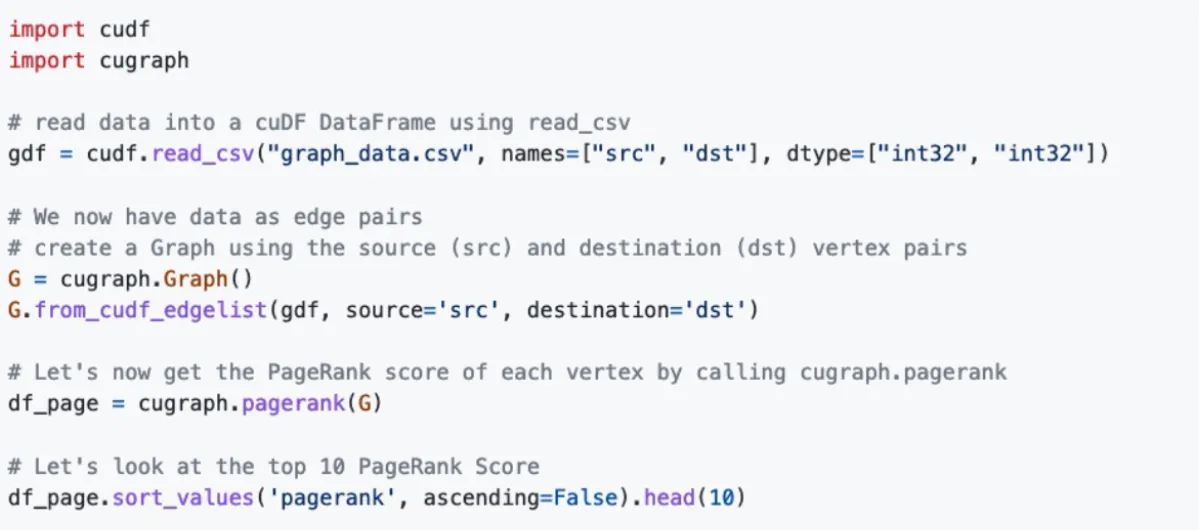
cuGraph
- Description: cuGraph provides analytics for graph data structures. It is ideal for social network analysis, fraud detection, and network traffic analysis.
- Advantage: It accelerates graph processing tasks, which are traditionally very resource-intensive and time-consuming.
Performance Benchmarks
-
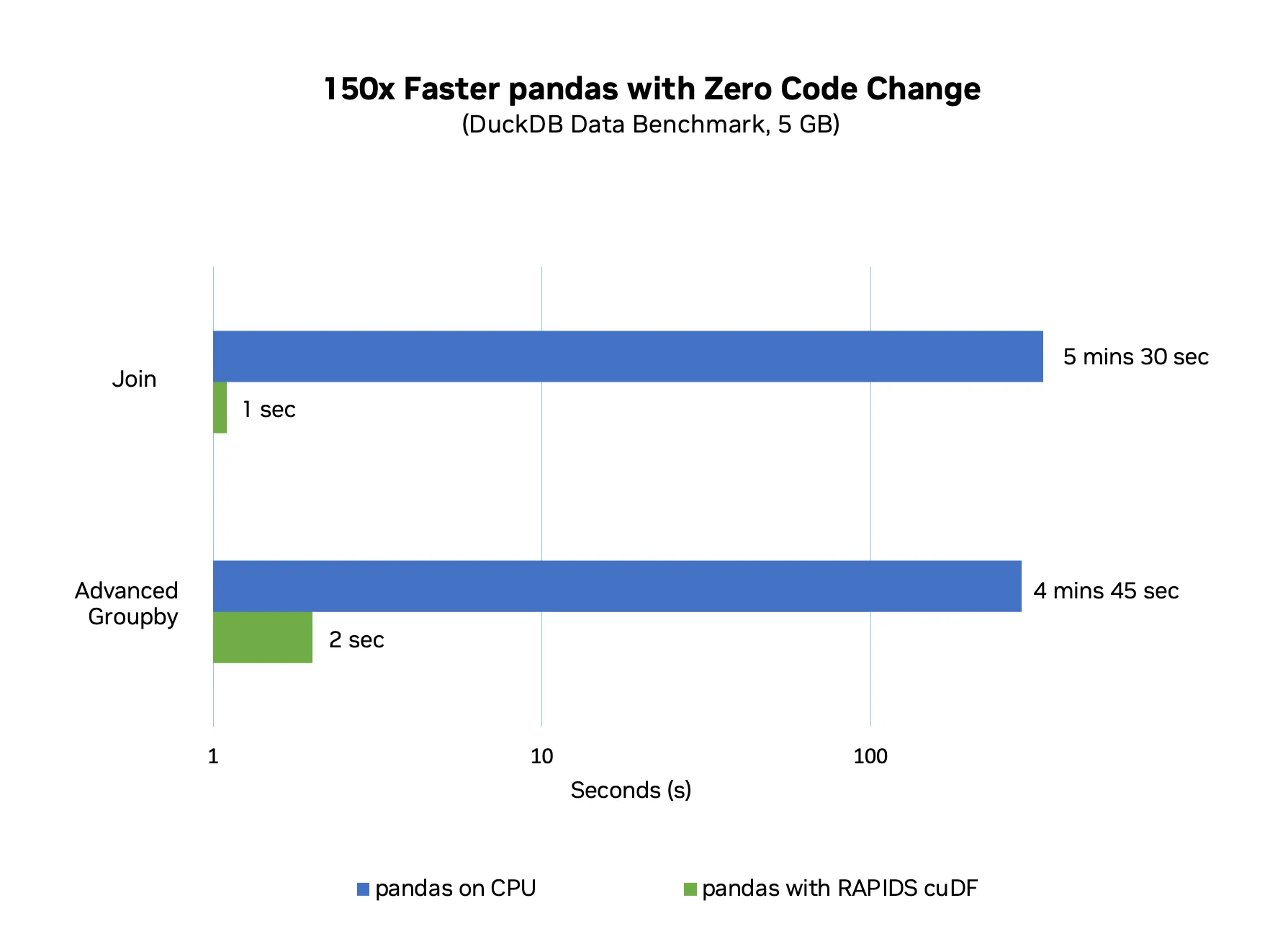
Data Processing: Tests have shown that RAPIDS can reduce data processing times from hours to minutes. For instance, a data joining task that took over 30 minutes on a CPU was completed in just 2 minutes using RAPIDS’ cuDF.
-
Machine Learning: In ML tasks, RAPIDS often achieves 10-50x speed improvements over CPU-only implementations. A training task that took 3 hours on a CPU can be reduced to mere minutes with cuML.
Use Cases and Applications
- Financial Services: RAPIDS accelerates risk management models and algorithmic trading strategies, processing massive amounts of data quickly.
- Healthcare: In healthcare, RAPIDS is used for patient data analysis, genomic sequencing, and drug discovery.
- Retail: Retailers use RAPIDS for real-time recommendation engines and customer behavior analysis.
Integrating RAPIDS in Your Data Workflow
How to Get Started?
1.Hardware Requirements: Ensure you have NVIDIA GPUs compatible with RAPIDS.
2.Installation: RAPIDS can be easily installed via Conda or Docker.
3.Data Preparation: Convert your data into a format compatible with RAPIDS (e.g., cuDF DataFrames).
Comparing RAPIDS with Traditional Data Science Tools
- Speed: RAPIDS dramatically outperforms traditional tools in data processing and ML tasks.
- Ease of Use: Designed to mimic pandas and Scikit-Learn, making the transition easier for data scientists.
- Scalability: Excellently scales with data size and complexity, especially beneficial for large datasets.
Conclusion
RAPIDS is transforming data science by harnessing the power of GPUs. Its components like cuDF, cuML, and cuGraph offer unparalleled speed and efficiency, making it an essential tool in the data scientist’s arsenal. Whether you’re dealing with large-scale data analysis or complex machine learning models, RAPIDS provides the performance and scalability needed to tackle these challenges effectively.
Thank you for reading! I hope this post has given you a comprehensive understanding of NVIDIA’s RAPIDS and its impact on the data science landscape. Feel free to share this post! 🚀📊👩💻👨💻